Sunday, December 5, 2010 | By: Beth

Oh, Old Spice

You know those hilarious Old Spice commercials? Well, in case you are some sort of hermit who has been absent from society for a LONG time, here is what I'm talking about:


Anyway, the following is what my friend, Becca, posted on my Facebook wall saying, "I knew you would appreciate this as much as I do." Yes, yes Becca I do. And I appreciate you showing it to me. It was just the kind of mental break/refresher I needed during my homework.  


Thank you Old Spice and Sesame Street.  Thank you very much.  

BK
Wednesday, December 1, 2010 | By: Beth

Articles, Articles, Articles

We are finished up our final round of articles discussions in Teaching Creative Writing last night. It was bittersweet (sort of).  We've had a lot of good discussions in this class, but the semester is coming to a close, and I'm ready for it. Thanksgiving was not the break that I needed.  I'm ready for Christmas Break, and I need it.

One of the articles we discussed is called "Inspiration, Creativity, and Crisis".  This article was interesting because it made me think again about the "writer's myth" that we've so often talked about in class. The myth I'm referring to is the one involving Divine Inspiration basically being the only way that people are able to write. Anyone who is in a creative writing program or has done any creative writing knows that creative writing is hard work. Lots and lots of hard work. Blood, sweat, and tears hard work...sometimes. Anyway, I thought about it, and I think I used to buy into the writer's myth" when I was younger. I'm pretty sure I thought that only brilliant people or tortured people could become writers.  I may have even thought that ideas happened randomly (that Divine Inspiration), as if they sort of fell into people's minds.  Oh, how wrong I was. I'm glad I know better now.

Being teachable also comes up in this article.  That is a critical part of creative writing. You can't become a better writers if you're unwilling to learn, to grow and change.  So open yourselves up to (constructive) criticism people! It's there to make you a better writer.

BK
Tuesday, November 30, 2010 | By: Beth

*GASP*

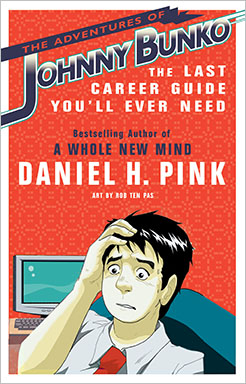
Yesterday (my birthday), I wrote to Daniel Pink, author of such books as Drive, A Whole New Mind, and The Adventures of Johnny Bunko. I've read A Whole New Mind and Johnny Bunko.  They are fun, easy reads.  Anyway, HE WROTE BACK TO ME! Here is his reply:


Bethany --

Thanks for the terrific note. I'm grateful you picked up copies of the books -- and I'm delighted you enjoyed them. Wonderful to hear -- and high praise coming from someone with your major.  Much appreciated.

Cheers,
Dan

I gasped...loudly.  My roommate asked me what was wrong, and I had a brief girlie moment of freaking out that a well-known, established author replied to my simple email. Drive is currently on my "To-Read" list. Also, I cannot recommend Whole New Mind and Johnny Bunko enough.  So go, go now and get your own copy of both books. You won't regret it.  

BK
Friday, November 26, 2010 | By: Beth

Properly Querying Agents

So the Best Damn Creative Writing Blog conveniently did a post about how to properly query an agent. I say conveniently because we recently talked about this in my publishing class. Doing your homework is important before querying an agent.You want to make sure that you've selected the right person to send your work to, and it's good to know what an agent likes/dislikes in a query letter.  Still, it's more important to please the agent professionally than it is to please them personally. They will care more about your "pizzaz and personality", your marketable product than about how much you know about their personal life.

Just be careful about what you put in your query letter.  Do your homework on the agent, but be professional, and SELL YOURSELF. Good luck!

BK
Wednesday, November 24, 2010 | By: Beth

Thank You, Ariel Gore!

In my publishing class, we recently discussed Ariel Gore's book How to Become a Famous Writer Before You're Dead.  How-To books tend to be boring, but this book is a fun easy read.  She tells you the truth about writing and publishing that she has learned from personal experience and interviews with other established published authors. The book even comes with exercises to put the advice into action.

What I like most is that her advice is genuine, and although some of it may seem obvious, other bits are things I would never think about. For example, Gore advises you to make a fool of yourself. Your first publications will be imperfect, but that's how things go. Live and learn, and use it as a stepping stone to become a better writer and publish more.

I really love Gore's funny snippets of advice. She writes, "be an anthology slut" because the competition to be published in an anthology is usually less than a literary magazine or journal, and even a small publication in an anthology is publishing credit. Stepping stones, people, stepping stones! Also, I liked her advice of choosing a good vice. Heavy drinking and smoking doesn't have to be your vices as a writer. In fact, it would be better for you in the long run to choose something like yoga classes or fizzy water as your vice. That way, you can live longer and enjoy your fame as a published author.

I obviously really enjoyed this book. It has definitely earned a spot on my bookshelf. On a side note, Gore has a blog where she posts information about writing workshops. She also does manuscript consultations with anyone who people who are serious writers.

Anyway, go grab a copy of this book.  I don't think you'll regret it.

BK
Tuesday, November 9, 2010 | By: Beth

The Visiting Poet

C.D. Wright visited is visiting UCA today and tomorrow. Tonight, I went to the "lecture" in which she read some poetry from her most recently published book. It was beautiful, poignant, and the poems in the book were linked by one character and based upon a truly tragic tale of discrimination in West Memphis (at least I think it was West Memphis, I could be wrong about that).

Anyway, it was nice to hear her read it, and then she answered a few questions, but only because few people asked questions. Her "craft talk" (usually a small conference room crowded with Creative Writing majors) is tomorrow during my American Postmodernism class. So I won't be able to go. Going to the lecture tonight really made me appreciate the craft talks of the visiting authors that I've been to. They are more interesting than the lectures, but that's because its a crowed room full of people eager to learn anything and everything from a visiting published author. The crowd at the night lectures tends to be a smattering of people with very different majors, but it's still good to go to.  Fun and interesting. I still had a good time. Use any chances you have to meet and talk with a published author whether they publish what you're interested in or not.  You won't regret it. I certainly haven't.

BK

P.S. - I garnered the courage (after a lot of prodding from friends) to ask her why she is published as "C.D." instead of Carolyn D. Wright. One's published name was something that we discussed in my Publishing class because once you choose one, you need to stick with it (that's what your fame and reputation are attached to). Anyway, she said that she chose "C.D." because there was already a Carolyn Wright publishing at the same time and she didn't want them to be mixed up or mistaken for each other. It had nothing to do with erasing any stigma associated with publishing under a female name (look up S.E. Hinton if you don't know what I'm talking about). So that was cool, for her to answer my question, and I was really nervous.

BK
Tuesday, November 2, 2010 | By: Beth

Happy Terrific Tuesday!

First and foremost, Happy NaNoWriMo! Good luck to everyone participating! I know you can do it! Also, Happy Election Day!

I just wanted to tell you lovely people about my terrific Tuesday. My classes were fun and interesting, and they went smoothly. I also went to an interest meeting about the British Isles study-abroad trip over the summer. I'm uber excited about this trip. Anyone want to buy a kidney cause I really really really want to go.  It would be so amazing.  Aside from that awesomeness, I then had a meeting with my advisor about my classes for the spring semester and I ONLY NEED 18 HOURS TO GRADUATE! This day could not get any better, unless I won a million dollars...

Okay, I guess that's not gonna happen. Anyway, today has just been an overall awesome day. Plus, I'm super glad that November is finally here. I love November - Thanksgiving, my birthday, NaNoWriMo, coats/jackets (all day, not just in the morning). It's just great, but it's also game time. I'm officially buckling down to get stuff done for my classes.

On that note, I'm gonna go to Teaching Creative Writing. We're going to talk about digital storytelling. I looked at several examples online, but those were just voice recordings or people talking directly into a camera (very boring). We're going to be doing a lot more than that. It should be fun...hopefully.

Again, Happy NaNoWriMo! Happy Election Day!  Go write something, and get out there and vote! I hope you're having as great of a Tuesday as I am.

BK
Monday, November 1, 2010 | By: Beth

Literary Branding and Dragon Slaying

The Best Damn Creative Writing Blog talked about branding recently, and they've continued the topic with Branding, Part 2. In part 2, they relate branding to writers and why it is important.

Building a "literary brand" is not the same thing as an author establishing their literary voice. It is important for an author to their writing style and voice to hook readers, but personal branding through social media is different. This is because what you write and who you are are two very different things. Personal branding is about who you are as a writer. Social media is about engaging with people directly - getting to know them and letting them know you. Branding helps you control how your audience perceive.

The BDCWB then gave a list of why all writers should brand themselves, at least a little bit if they are going to be on the internet. The list is interesting and important, and I would highly encourage any entrepreneur to look at it and consider branding as a means to build their business. Right now, I want to move on to something else that BDCWB talked about. Dragons, specifically slaying them.

The BDCWB reminds us that no matter what you write, those dragons will always be there. I think that's something that many people forget in their desperate pursuit to become published authors. You can't write something that everyone will love.  There will always be someone there who wants to take a bite out of you.

We, as writers also have our own personal dragons.  These are always there telling us that we will never be successful, that we aren't really writers. We especially need to slay these.

So grab your swords ladies and gents, and slay those dragons...and maybe do some personal branding along the way.

BK
Sunday, October 31, 2010 | By: Beth

Post-Fall Break

Fall Break was last week. Well, not exactly last week considering today is Sunday, but it was the week before last week. Anyway, I talked to several people last week about how their post-Fall Break week was going. Practically everyone that I talked to was having a rough time. Tired and frowning faces haunted the halls and classrooms the week after Fall Break. So today is Sunday, and to everyone out in the interweb, I hope today has been a great beginning to a great week. Here are a couple of things to be happy about:

  1. Fall is officially officially officially officially here.  Look at all the pretty colors and break out the coats! 
  2. The semester is over halfway over. We have a little over a month of school left! 
  3. Pumpkin Spice Latte is at Starbucks! 
  4. Today is Halloween!
  5. Thanksgiving Break will be here soon!

Okay, if I try to keep going with this list, I'm gonna have to start making stuff up. Just look around and I'm sure you'll find something to be happy about. To finish off this post, I'll leave you with some of William Blake's poetry. I have a soft spot for Blake, but if you're a Keats fan, my friend Casey honored Fall on her blog with Keat's Ode to Autumn.  

To Autumn 
By William Blake


O Autumn, laden with fruit, and stainèd 
With the blood of the grape, pass not, but sit
Beneath my shady roof; there thou may'st rest,
And tune thy jolly voice to my fresh pipe,

And all the daughters of the year shall dance!
Sing now the lusty song of fruits and flowers.

`The narrow bud opens her beauties to 
The sun, and love runs in her thrilling veins;
Blossoms hang round the brows of Morning, and
Flourish down the bright cheek of modest Eve,
Till clust'ring Summer breaks forth into singing,
And feather'd clouds strew flowers round her head.

`The spirits of the air live on the smells
Of fruit; and Joy, with pinions light, roves round
The gardens, or sits singing in the trees.'
Thus sang the jolly Autumn as he sat;
Then rose, girded himself, and o'er the bleak
Hills fled from our sight; but left his golden load.


Let me know if you liked the poem. I'm gonna go watch the premier of The Walking Dead on AMC, now. I'll probably have zombie nightmares tonight. Happy Halloween! Have a good time, and be safe.

BK
Tuesday, October 26, 2010 | By: Beth

Self-esteem in Creative Writing

More article discussions in Teaching Creative Writing tonight. I know, it seems boring, maybe monotonous, but we actually have a lot of good interesting discussion about a lot of different (and sometimes difficult) subjects. One of the articles we will be discussing is "Creativity, Caring, and The Easy 'A'".  

Self-esteem, and how it affects the classroom is what the article focuses on.  Who is responsible for self-esteem?  Is it the student or the professor? I would say the student, but professors don't need to be unnecessarily harsh. Still, professors can also have self-esteem issues. Their confidence may waver if students are having trouble understanding what is being taught, or misunderstand constructive criticism for dislike of the student or their work.    

Also, just because professors are encouraging, building self-esteem, how does this affect students' work? Even though your workshops have a comfortable open atmosphere, that doesn't mean the students are going to produce great work. It is the professor's job to be honest about the work submitted, to critique it and make it better.  

To be honest, I'm not sure how I feel about this article. I'm open to any and all views on this.  Help me out here guys.  What do you think?

BK

Monday, October 18, 2010 | By: Beth

"Take Me Out" by Atomic Tom LIVE on NYC Subway

So I've decided to start posting the random things that I stumble across on the internet for your pleasure.  The following viral video of the Brooklyn band, Atomic Tom, has gotten well over one million hits on YouTube.  They used four iPhone apps to recreate the individual instrument tracks and rehearsed three times before  performing live on the subway Friday, October 8, 2010.  The footage was recorded on three iPhones and executed in one take.  There were also no audio enhancements during the editing process of the video.  It sure says a lot about the leaps and bounds technology has made, huh?  


I cannot get enough of this song.  I'm listening to it over and over as I do my homework.  Apparently it was a publicity stunt, but I still think it's cool.  They organized it without letting their manager, lawyer, or record label know; they wanted credit for putting it together without anyone's help.  You can download their album, The Moment, on iTunes which came out on July 27.


Anyway, without further ado, this is Atomic Tom performing their single, "Take me Out".  Enjoy (and let me know what you think)!


Monday, October 11, 2010 | By: Beth

Tyrants in the Classroom

Tomorrow in our Teaching Creative Writing class, my friend Megan and I are going to be leading discussion on "Charming Tyrants and Faceless Facilitators: The Lore of Teaching Identities in Creative Writing". It's an interesting article that deals with misconceptions of identities when it comes to professors.

While pursuing her M.F.A.Mary Ann Cain talked about the tough decision of choosing between her Composition Theory class and a class with Famous (Pulitzer Prize winning) Author (The famous author in question was Toni Morrison, pictured to the right). Everyone thought the decision would be an easy one, that she should obviously choose the class with Famous Author. But by the time Famous Author's class had started (four weeks after all the other class), she had already done a lot of work for her Comp. Theory class. Cain really wanted to take Famous Authors class of "select" students, wanted  Famous Author to be The Mentor who could personally help Cain take her writing to a new level. However, Famous Author was looking more and more like a tyrant as everyone Cain spoke with about her class dilemma insisted that she drop the Comp. Theory class.

Turns out, Famous Author was anything but a tyrant. She gave Cain a call and worked out a way for her to be a part of both classes.  How awesome is that?

So, basically, maybe that professor you hate or are terrified of or are frustrated with isn't the tyrant you think they may be. That's usually what I've discovered...sometimes.

I don't know, do you guys have tyrants for professors, or are they sort of faceless facilitators, teachers who completely give their power over to the students. As with all things, balance people, it's all about the balance.

BK
Monday, October 4, 2010 | By: Beth

Poisoning the Well, One Movie at a Time...Is Okay...Sometimes

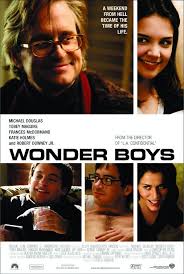
So a couple of weeks ago we read an article by Wendy Bishop and Stephen Armstrong called "Box Office Poison".  It talks about the way that writers and the writing process are portrayed on film and how that influences  the way people view writers and the writing process.  We then watched two movies, Finding Forrester and Wonder Boys, and are going to look at how the film portrays writers/the writing process versus how it really is while considering points made in the article.

While watching the movies and thinking about the article, I kept thinking about the "writer's scene" that we talked about in the first few chapters of Released into Language of the solitary writers slaving away by candlelight in a tall tower.  That's not what it's like for most writers.  It's sort of funny that the two movies we watched portrayed two writers at the opposite ends of the spectrum.  In Finding Forrester, the famous novelist is a recluse (almost to the point of a misanthrope) that has food and supplies delivered to his apartment so he never has to leave.  He's very old fashioned, pecking away at a typewriter when he decides to write.  The portrayal of this character is very close to the classic idea of a writer that we learned about in Released into Language.  Yet, in Wonder Boys, writers are portrayed quite differently as adulterous creative writing professors desperately trying to meet the standard of their last successful work of art all the while getting entangled with the issue of stolen property.  It's really quite over-the-top.  

But that's what Hollywood does.  They make things over-the-top because portraying writers or the writing process as it really is would be boring.  That would certainly be the case with me.  I do some of my best writing sitting in the living room of my apartment with muted cartoons on the television and a bottle of water.  No one wants to see a two-hour movie about that.  So Hollywood over exaggerates the life of a writer whose day may start with a cup of coffee from Starbucks and end with a brilliant novel, but between the two was a run-in with some drug dealers over mistaken identity and the survival of a few attempts on their life all while they try to uncover the government's cover-up while sustaining their alcoholism.  Over-the-top, but it makes for quite an entertaining movie, and that is Hollywood's job.  They are suppose to make something that will entertain us; it doesn't necessarily have to be accurate.  

After watching the movies, we are suppose to address the following question on our blog: If you were an intelligent visitor from outer space curious about teaching creative writing, what would you learn if all you had to go on was what you learned by watching Finding Forrester and Wonder Boys?

Well, I'd learn that writing talent comes in all shapes, forms, and sizes, that even the most unassuming person can write, and write well with a little help.  I remember Jamal's angry face (from Finding Forrester) when he opens his notebooks and sees a sea of red editing comments.  Editing can easily become harsh, so I'd be careful about that.  The English teacher from Finding Forrester was very irritating, and I know that though he is a teacher, his job isn't to point-out how much better he is than us at something.  Teaching creative writing involves being a part of an encouraging community, but you can't really teach if the students don't want to learn.

Anyway, that's my take on the movie industry's portrayal of writers and the writing process.  They are off by a little (and sometimes a lot).  Slowly but surely, one movie at a time, they've managed to create inaccurate preconceived notions about writers and writing in general.  But it makes for great movies.  And I'm okay with that.  I want to leave you guys with a couple of really great lines from Finding Forrester.  I was scrambling for paper to write them down.  I hope you like them as much as I did.

Forrester: Writers write things to give readers something to read.

Forrester: No thinking - that comes later.  You must writer your first draft with your heart.  You rewrite with your head.  The first key to writing is... to write, not to think!


I really love that second quote, don't you?

BK
Sunday, October 3, 2010 | By: Beth

Branding Products vs. People

Our world is becoming an increasingly digital environment, and we all have to go with the changing flow of it, especially writers. The thing about writers is that anyone at virtually an age can become a writer, and the integration of technology into a writer's career is practically unavoidable. Yet some people feel like they are drowning in the ever increasing sea of technology because editors and agent don't teach writers about facebooking, tweeting, blogging, or updating their own website. 

To help the situation and keep frustrated writers from quitting technology all together, The Best Damn Creative Writing Blog is going to talk about establishing an online literary presence and effective communication over digital media. They started with branding.
The word "branding" is apparently overused and misused, and people don't really know what it is. The BDCWB points out that branding is usually used in marketing to reference a product, but that "personal branding" has become important, especially for writers.

They said that "a brand is a promise.  Branding is about consistently realizing the pre-determined expectations of a user each time they interact with you, your service, your product or any extension thereof." 

Branding is what causes consumers to have certain expectations of certain products because the product's branding has told you to expect certain things of certain products. Still, branding doesn't stop with consumer products. It goes beyond the pumpkin spice lattes and Crest toothpaste.  

The BDCWB said it perfectly, "social media has allowed us to see that viewing one’s online self not merely as a person but as a brand consumed by an audience is an effective way to approach communication strategy in various digital outlets."

We've talked about branding a little bit in my publishing class. Branding is important for writers because it helps them to establish themselves and to establish a loyal readership. I'm doing a little bit of branding with this blog. I joined Twitter earlier this year, and that's also involved with branding. We'll see where all of this goes.


Are you personally branding yourself as a writer? What can people expect from you?

BK
Monday, September 20, 2010 | By: Beth

Guest Speakers, Authors, and Literary Magazines

So, I'm REALLY bad at this whole blogging thing. I'm sorry, it's just that I've been drowning in a sea of homework and am barely able to keep my head above water. Anyway, I'm here now, and I'm gonna try and blog at least twice a week, so we'll see how that goes. Now get comfy, ladies and gents. This is gonna be a long post.  I've got quite a bit to share.

Mike Rush was the guest speaker in my How to Get Published (HGP) class this past Tuesday. He was, by far, one of the best guest speakers that I've ever had the honor of hearing. He was inspiring and casual; he didn't lecture like he was an experienced published author on a pedestal. In fact, the stuff he was saying was so awesome that I had to write at least some of it down...and I ended up taking two and a half pages of notes. There's so much I want you guys to know about that I'm gonna break it up between two posts.

He began by giving us the prompt, "Publishing means..." and having us write about it.  Then, a few people shared what they wrote. I didn't share, but I wrote: Publishing means putting yourself out in the world for others to see, either formally as in a printed book, poem, or short story, or informally as in a blog or YouTube video. It means making your thoughts, feelings, and ideas heard and accessible to other people. It means making money off of your creativity, or it means getting your ideas or information out in the world to improve things like education (but NOT for the money). Publishing  means being put up for sale like cattle to be poked, prodded, and judged. 

Maybe not the most uplifting outlook on publishing, huh? Well, then he talked about the vulnerability of publishing because it's not something that many people think about. Most people just want to be famous and make lots of money anyway (which doesn't always happen). He called publishing the end of innocence, and if you think about it, it really is. No one can write something that everyone will love. There will always be someone out there who doesn't like your work and is critical of it.

Rush teaches math at Vilonia High School, and is a published author, but the first thing he wrote was something to give away. He and his wife were part of a group that got together and talked about their spiritual beliefs, and I believe the book he wrote for them was called The Lessons: Things I've learned about God from my Dog. Then in 2004, he participated in the Central Arkansas Writing Project's Summer Institute where he wrote and published a review of the book I am a Pencil by Sam Swope. He just happened to have read the book, and someone just happened to need someone to write a review of it. I bring up these seemingly random examples because they are great examples of being part of a community. Rush stressed over and over to our class the importance of having a writing community. Even C.S. Lewis and J.R.R. Tolkien got together in a pub and read each other's work (Lewis reading Lord of the Rings and Tolkien reading The Chronicles of Narnia).

Talking about being part of a local writing community led into talk about the writing community of all authors- scholarly, published, and unpublished. That grand community is apparently quite inviting. Rush said, "Try and find the author of every book you read" (which just happens to be one of our assignments for the class - contacting three over the course of the semester). He went on to say that "those we hold up [on a pedestal] will turn around and hold us up". Lady Vanderslice reaffirmed that statement and told us about an established, published author (Daniel Pink, I think) who had commented on her blog. No matter how high we lift authors, they really just want to be on our level, part of the community and encouraging us in our endeavors (and being encouraged in return).

So, as I said earlier, for HGP we have to contact three authors over the course of the semester.  It sounds really cool...until you have to do it. I was looking for ways to contact some of my favorite authors to thank them for their work, and I actually didn't find any contact information for some of them.  So I decided to use Twitter. I was so annoyed that I had to try and condense a pages worth of adoration of their work to 140 character or less, but I did. I tweeted to Bill Willingham the following:  I just wanted to say thanks for writing the Fables series. I've recently stumbled onto them and just can't put them down. I really wish I could have written more than that, but oh well. And I must say that I hesitated right before I clicked the "tweet" button. I was thinking, "who am I to talk to him", but what's done is done... and he still hasn't replied. Oh well, better luck next time, right?

Last, but certainly not least, for HGP we also had to subscribe to two literary magazines. I chose American Short Fiction and The Antioch Review. My copy of American Short Fiction came in the mail today! I can't wait to read it! That's all for now, folks. I'll give you some of Rush's other golden nuggets of writing wisdom... tomorrow, hopefully. What d'ya think so far?

BK
Monday, September 13, 2010 | By: Beth

Evaluating and Responding to Creative Writing

So chapter 8 of Released Into Language is about evaluating and responding to student's creative writing. I'll hit some of the high points here because this chapter really reaffirmed some ideas I already had about evaluating and responding to creative writing.

The chapter begins by stating that some creative writing teachers admit that grading a student's work cannot be done. I would definitely agree, to an extent.  I think back to the first day of my Illustrated Narrative Workshop class. Our professor openly said that he didn't have the right to critique everyone else's work. We still discuss pieces and try to derive meaning and establish context, but we certainly don't want to say something that would make them revert to the fetal position. I truly believe that you can't really judge a person's creative work - unless it is obvious that they don't even care about their own work and are trying  to turn in crap.

The author also talks about the composition teacher's ability to "wash a page with red ink". That's something that I distinctly remember from junior high and high school, but it wasn't just my English teacher that made papers or tests bleed. Almost all of my teachers wielded a mighty red pen that everyone feared for their grade's sake. The red pen was threatened on many occasion.


Bishop gives us Peter Elbow's list of problems that concern tradition grading, and I especially  liked the last point about a person's intelligence or learning being "summed up on one dimension". I'd never really thought about this until my Lit. for Middle Grades class last semester when we actually got onto the subject of written exams. It doesn't matter if a test is multiple choice or fill in the blank. Either way, a test is arbitrary because it limits the students ability to show their knowledge. They can't get over 100%.  Okay, they might be able to if there were bonus questions, but they are still limited by the questions that are being asked on the test. That was why my professor hated tests.  That's why we always wrote papers in his class and we were allowed to choose the topic. He was allowing us the chance to go above and beyond and show him our insights into texts. So think about that the next time you have to write and essay.


So, what do you think about evaluating and responding? Let me know in the comments. And thanks for those torturous papers, Sommers!

BK
Wednesday, September 8, 2010 | By: Beth

Better Late Than Never, Right?

I started a blog on Wordpress over Labor Day weekend.  I even posted about Labor Day, and then I typed up a word document of my reflection on chapters 1-3 of Released Into Language, but I never even posted it online. Wordpress and I were having a sort of love/hate relationship anyway.  So here I am on blogger and here is my reflection.  Enjoy!

"Professional writers are notoriously opinionated" is how chapter one of the book begins. All I can do is smirk and laugh to myself. Yes, yes they are, and that is the only reason why some people write - to make sure that other people know about their opinions, thoughts, or ideas. Anyway, that first sentence that I keep smirking at ends with "writers are people who write". That really resonates with me. I'm not sure why right now, but it does. I'll do some more thinking about that and get back to you.

Bishop quotes Donald Murry, a creative writing professor, who wrote that a professor "will not be a teacher, he will be a senior learner". This reminded me of Dr. Stengel, my American Post modernism professor. This will be my third class with him, and he begins every semester by letting the class know that he teaches so that he can learn from students. He wants to hear our thoughts and ideas.  It's encouraging that someone with a Ph.D and years of teaching experience believes that every individual in the class has something important to bring to the table. All of my creative writing professors are the same way. They are encouraging in trying to foster our creativity and grasp of the writing craft. Several pages later, talks about the writing community that creative writing workshops give students. That's what we are. We are all colleagues and part of a community, a community of learners, explorers, creators - trying to make ourselves and each other better at what we do.

Later on, Bishop mentions a seminar that "was not meant to commercialize a writer", but was meant to teach them about different parts of the publishing world that they would enter as a professional writer some day.  This is an important thing to do as an writer. You can't become a part of an industry that you know nothing about. This is why I'm taking Lady V's How to Get Published Class.

Reading about the theories was a bit overwhelming. I felt like I was being pulled under by a whirlpool, but the same thing happens in my English classes.  Sometimes it's easy to get mired in theory. Though, I did enjoy the Teacher vs. Student sections a few pages over. Lectures and discussions led by teachers are important, but so are those led by students.  I've learned that I do best in those college classes that find the delicate balance between the two.

I'll leave you with a quote by Joseph Conrad from a section of the book about writers and their goals.  He said, "My task...is, by the power of the written word, to make you hear, to make you feel - it is before all, to make you see." I just loved that.  

Well, there you have it. Those are my thought on some important things that stood out to me. What do you think? Sound off below.

BK
Tuesday, September 7, 2010 | By: Beth

To Blog, or Not to Blog

That was the question. 

I've wanted to start a blog for awhile now. Many times over the last year, I've asked myself whether I should or not.  I'm double majoring in English and Creative Writing; so I know several people with blogs. It's sort of something that we English/Creative Writing majors do. Besides, blogging just seemed like the next logical step in improving my writing. Still, I kept putting it off. During the school year, I decided not to start one because of the work load. During the summer, starting a blog seemed pointless because hardly anything in my life was worth blogging about. 

I finally decided right before classes started that I would start a blog at the beginning of the school year. The idea was that if I had to sit down and write, I would become a more disciplined writer (something I really struggle with).  Conveniently enough, I found out on the first day of class that I have to start a blog for two of my classes: How to Get Published and Teaching Creative Writing.  Some of my posts will have to do with publishing and creative writing, but mostly they will be about anything and everything. 

So, here I am, ladies and gents. This is my official welcome to my own little corner of the blogosphere. I hope you like it here. I think I will, and either way, I'm here to stay. 


BK